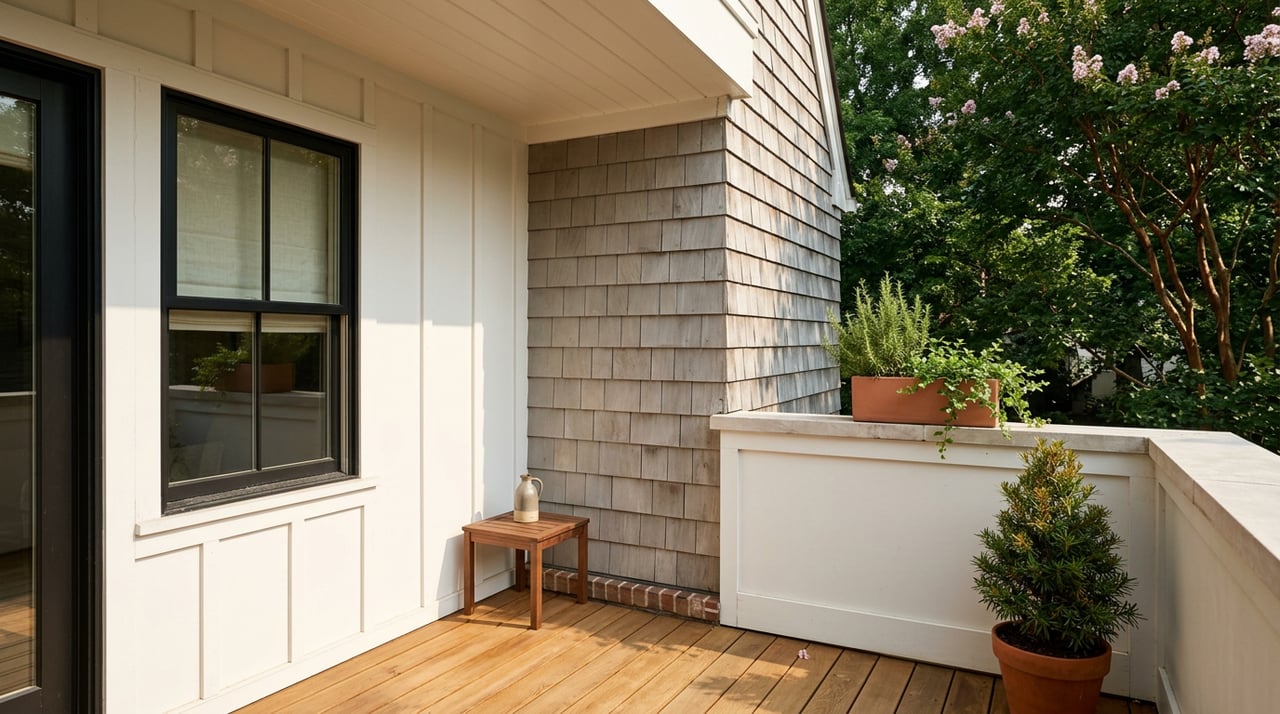
Two nearly identical two-bedroom units listed inside The Village at Mayfaire this year. Same square footage, same view of the landscaped green, same finishes down to the plantation shutters. One went under contract in the first weekend at ask. The other sat, took a price reduction, and closed with a credit at the table.
The difference was not the paint color. It was paperwork.
The document stack has become the product
Mayfaire is an attached-product market. The Village at Mayfaire, Mayfaire Townview above Main Street retail, Parkside at Mayfaire, and the townhome enclaves between Eastwood Road and Military Cutoff share a common feature that single-family sellers in Landfall or Autumn Hall do not have to think about: a master association whose insurance policy, reserves, and governing documents travel with the deed.
In 2026, buyers' lenders read those pages before they clear a loan to close. That is the shift. A Mayfaire seller's leverage now depends less on staging and more on whether the three documents underwriters ask for tell a clean story. The three are the master insurance declarations, the current reserve study, and the resale certificate. Prepare them well and the 2026 insurance environment becomes a differentiator rather than an obstacle.
What has actually changed underneath the market
Wilmington is still leaning toward sellers. The metropolitan median sale price sat at roughly $479,000 over the three months ending May 2026, up about 5.4% year over year, with homes averaging 57 days on market and closing near 98% of list. Within Mayfaire, the twelve-month average sale price runs closer to $659,000 across a mix that includes townhomes, condos, and single-family homes in Parkside.
What changed is the cost of insuring an attached building on the coast. On June 1, 2026, a 7.5% average statewide home insurance rate increase took effect, approved by North Carolina Insurance Commissioner Mike Causey and following an identical 7.5% increase in 2025. Coastal condo HO-6 premiums in Wilmington now typically run $400 to $800 or more per year, several times inland rates. Coastal HOA dues have risen 15% to 30% over the last two years in many buildings, and the driver is almost always one of two things: a master insurance renewal, or a reserve study that surfaced an underfunded system.
A well-prepared listing turns that context into a story the buyer's lender can approve.
Reading your master policy the way a buyer's lender will
Under Chapter 47C of the North Carolina Condominium Act, associations are required to maintain property insurance covering common elements and the units to certain specifications. That does not tell a buyer what is actually covered inside their own walls. That answer lives in the master declarations.
Three questions decide the loan:
Is the master policy "bare walls," "single entity," or "all-in"? Where does the association's responsibility stop and the unit owner's HO-6 pick up? What is the named-storm deductible, and how does the declaration allocate it between the association and the unit owner in the event of a loss?
The last question is the one that quietly costs deals. New Hanover County is one of the 18 eligible coastal counties where wind and hail coverage often lives with the North Carolina Insurance Underwriting Association, the state's Beach Plan. A Beach Plan named-storm deductible is typically expressed as a percentage of the insured value. On a $400,000 dwelling, a 5% deductible is $20,000 out of pocket before the policy responds. In a condo, the governing documents decide whether that dollar figure is spread across owners as a special assessment or absorbed by the association's reserves. A buyer who reads the declaration and finds no clear answer is a buyer who walks or asks for a credit.
Pull the current declarations page from your association's manager before you list. If the master carries wind, confirm the deductible in writing. If wind is excluded and picked up by the Beach Plan, say so in the listing remarks. Silence reads as a red flag.
The reserve study is a selling document now
For roughly the last decade, buyers treated reserve studies as boilerplate. In 2026 they read them.
A funded ratio above 70% is generally considered healthy in coastal condominium communities. Below 30% is a warning flag that a special assessment may be coming. Between those numbers is a conversation.
If your association's most recent study is strong, ask the manager to include the executive summary in the resale package rather than the raw spreadsheets. If the study is soft, get ahead of it. Buyers absorb a known number. They punish a surprise. When The Village at Mayfaire, Mayfaire Townview, and Parkside are competing for the same buyer pool, the listing that hands the reader a clean two-page reserve summary wins the read.
What the resale certificate actually needs to include
North Carolina law prohibits transfer fee covenants that require payment to a developer or third party on transfer, with narrow exceptions for older agreements established before 2010. Resale package fees themselves are legitimate and are charged to the seller. A complete package for a Mayfaire condo or townhome should contain:
- The current master insurance declarations, including the named-storm deductible and any Beach Plan certificate.
- The most recent reserve study and funded ratio.
- The last three years of operating budgets so a buyer can trace where dues actually went.
- Any minutes discussing pending assessments, roof or elevator projects, or master policy renewal negotiations.
- Rules on leasing, short-term rentals, pets, and parking, since these change buyer pools.
- A statement of the seller's account with the association, showing dues current through closing.
Order the package the day you sign the listing agreement. Managers are working through a heavier queue in 2026 than in prior years, and a package that arrives after due diligence has begun compresses the buyer's timeline in a way that invites price cuts.
The math that catches sellers off guard at the table
Due diligence periods in coastal New Hanover contracts commonly run 14 to 21 days. Inside that window a buyer completes the home inspection, wood-destroying-organism inspection, appraisal, and any specialist follow-up. If the buyer's insurance quote comes in higher than expected because the HO-6 has to cover a larger share of the interior, the buyer asks for a credit. Reasonable negotiated repairs and credits on a well-maintained coastal home in 2026 tend to land in the $2,000 to $8,000 range, with major items pushing higher.
Sellers who share the insurance picture early keep that conversation in the reasonable band. Sellers who let the buyer discover the deductible allocation for the first time at the appraisal call do not.
One more note on cladding. If your unit is in a stucco-clad building, expect the buyer to ask for a specialist moisture inspection. The protocol used nationally for EIFS moisture testing was developed by the New Hanover County Inspection Department in Wilmington after the moisture failures documented on local homes in the mid-1990s. Moisture readings are considered current for 30 days and a stucco inspection for sale purposes for 120 days. Order the specialist inspection yourself before you list rather than reacting to the buyer's report.
The story the neighborhood is telling right now
Buyers evaluating a Mayfaire condo are also reading the surrounding development picture. Center Point, the 23-acre mixed-use project near Mayfaire, is delivering retail through winter 2026 and early 2027. The Avenue on Military Cutoff, approved with infrastructure underway, is bringing roughly 500 luxury apartments and a Westin hotel component. Mayfaire West, the previously announced project of 256 apartments and 223 townhomes and carriage houses between Town Center Drive and Gregory Road, has been reported by WilmingtonBiz as on hold with no pending development activity more than a year after the announcement.
Cape Fear Development's Brian Eckel has publicly estimated roughly 1,800 multifamily units in the pipeline for delivery from early 2026 through mid-2027 across the greater Wilmington area, enough that the market is likely to feel overbuilt at times and lean on concessions. For a Mayfaire condo seller this is a reason to price with precision rather than aspiration, and to lean on scarcity language honestly. A well-documented owner-occupied condo in a stable HOA is a different product than a Class A apartment leaseback.
A short pre-listing checklist
- Request the resale package the day you sign the listing agreement.
- Confirm the master policy's named-storm deductible and Beach Plan status in writing.
- Attach the reserve study executive summary and funded ratio to the listing file.
- Verify your account with the association is current and export three years of budgets.
- Order any specialist inspections (stucco moisture, if applicable) before the buyer's inspection window opens.
- Ask your agent to summarize the document stack in the listing remarks so lenders find what they need on the first read.
FAQ
How long does a resale package take to arrive in a Mayfaire community? Timelines vary by management company and season. In practice, plan for one to three weeks in 2026. Ordering the package at listing rather than at contract keeps a 14 to 21 day due diligence period from becoming a leverage problem.
Does the HOA's master insurance mean my buyer will not need much of their own coverage? No. Even where the master policy carries wind and hail on the building, unit owners in coastal North Carolina still need an HO-6 for interior improvements, personal property, loss of use, and liability. Some buildings also require the unit owner to carry a share of the master deductible. The declaration is the only place to find that answer.
Will the new development around Mayfaire help or hurt my sale? Both, and unevenly. Retail delivery through Center Point supports long-term demand for owner-occupied product close to Town Center. New multifamily supply may pressure rents and give investor buyers more options elsewhere. Price and position the listing for a primary or second-home buyer rather than an investor and the surrounding pipeline is a tailwind.
Let's Connect
If you are thinking about listing a condo or townhome in Mayfaire this fall or in early 2027, the value of preparing the document stack before the sign goes up has never been higher. Stephanie Vogel works with Mayfaire sellers on the full picture — pricing, presentation, and the paperwork buyers' lenders read first. Reach out for a quiet conversation about your unit and the current market for it.