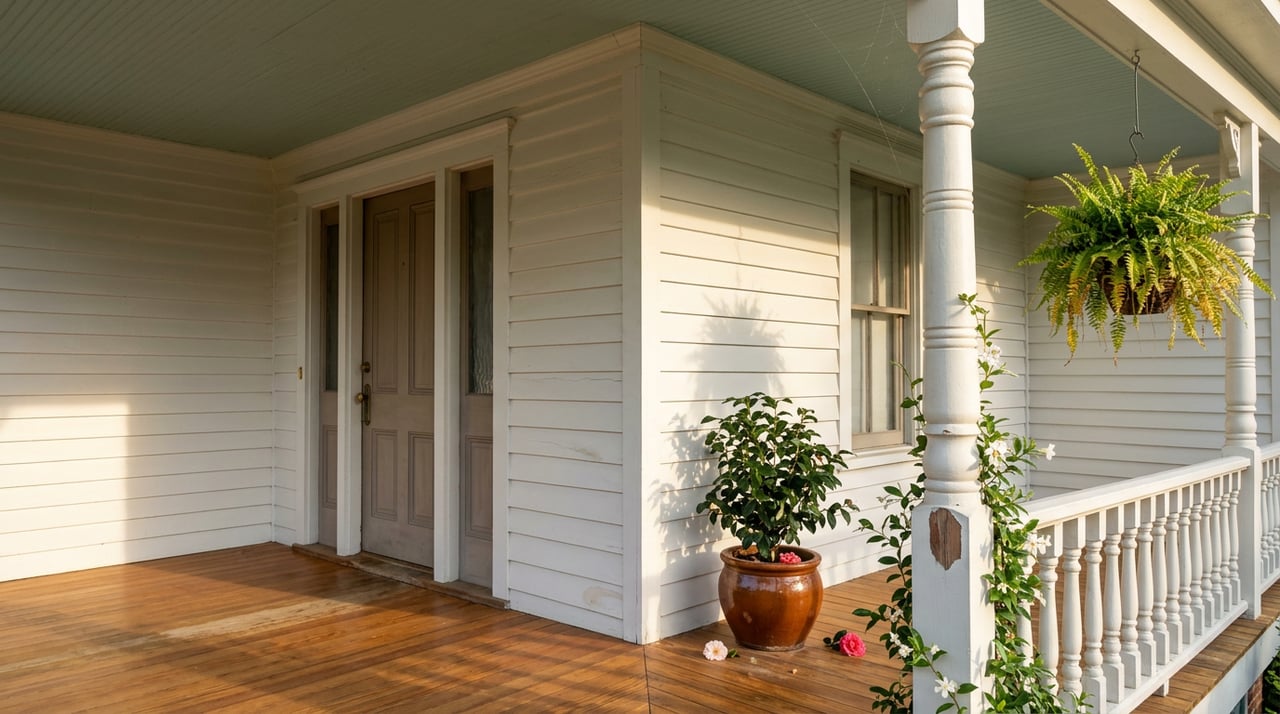
On March 12, 2026, the Wilmington Historic Preservation Commission opened a case file on a parcel at 226 South Front Street. The record behind that hearing goes back further than most buyers would guess: a demolition request from August 2008, a second demolition request in December 2014, an after-the-fact approval in February 2017 for porch underpinning that had already been built without a permit, and an approved rear addition in October 2024. Four separate owners' decisions, filed under one case number, attached to one address, sitting in a public folder anyone can request.
That is the part of buying or restoring a home in Downtown Wilmington's Historic District that rarely comes up until it matters. You are not just buying square footage and old-growth heart pine. You are buying a compliance history that predates your closing date and will outlive your ownership too.
What a Certificate of Appropriateness Actually Covers
Within the city's local historic districts and historic overlays, the City of Wilmington requires a Certificate of Appropriateness (COA) from the Historic Preservation Commission before any exterior alteration, from a new window to an addition to a change in siding. The commission is currently a seven-member board appointed by City Council, charged with reviewing changes against the city's adopted design guidelines.
Not every project needs a full hearing. According to the City of Wilmington, minor exterior work can often move through an Administrative Bypass, reviewed and approved directly by city preservation staff rather than the full commission. What almost never requires review is the inside of the house. As Port City Daily reports, North Carolina statute protects interior modernization in these districts, so a kitchen renovation or a new bathroom layout stays outside the COA process entirely. The line the city actually enforces is the exterior, and it enforces it closely.
The Rule That Surprises Buyers at the Closing Table
Here is the mechanism that catches people off guard. A COA, or the lack of one, attaches to the property. Not to the person who did the work.
Port City Daily has documented cases of new owners discovering, after closing, that a previous owner made changes to a downtown historic house without ever filing for approval. If the commission later declines to approve that work retroactively, the current owner, whoever that happens to be, is the one responsible for bringing the property back into compliance. That can mean removing an addition that was already paid for and already lived in.
The appeal path exists, but it is narrow. According to Wilmington's historic district guidelines, a homeowner who disagrees with an HPC decision has ten days from the hearing to file with the city's Board of Adjustment; Preservation North Carolina explains that the board does not consider new evidence. Reporting on the process has described the appeal route as neither cheap nor quick. A City of Wilmington HPC case packet states the design standard that explains why the bar sits where it does:
"The historic character of a property shall be retained and preserved."
That single sentence, repeated in HPC case packets across the district, is the standard every exterior decision gets measured against, whether the request is a new awning downtown or a rear addition on a residential block.
Two Designations, One Confusing Overlap
The City of Wilmington describes Downtown Wilmington as carrying two separate historic designations, and conflating them is an easy, expensive mistake.
| Local Historic District | National Register Historic District | |
|---|---|---|
| Who enforces it | City of Wilmington's Historic Preservation Commission | A federal and state recognition program |
| What it requires | A Certificate of Appropriateness for exterior changes | |
| What it enables | Compliance with city ordinance, protection of neighborhood character | The North Carolina Historic Preservation Office describes eligibility for state historic rehabilitation tax credits. |
| What to verify before you buy | Whether the parcel sits inside the local overlay boundary | Whether the structure is individually listed or contributes to a National Register district |
A home can be firmly inside the Local Historic District, subject to every COA rule described above, without automatically carrying National Register status. The two programs serve different purposes and get administered by different offices, one by the city, one by the North Carolina State Historic Preservation Office. If a restoration budget depends on a tax credit, that eligibility needs to be confirmed on its own, not assumed because the house sits on a brick-paved downtown street.
The Window That Makes Timing Matter
For an owner-occupant, North Carolina's current historic rehabilitation program offers a 15 percent state tax credit on qualified rehabilitation expenses for a residence listed in, or contributing to, the National Register of Historic Places. To qualify, rehabilitation spending has to exceed $10,000 within a 24-month period. The North Carolina Department of Revenue instructions cap the credit itself at $22,500 per parcel, which caps the qualifying expenditure at $150,000. For someone restoring a personal residence, the owner-occupant program is the one that applies.
That program is not permanent. The North Carolina Department of Revenue explains that, under the statute governing it, Article 3L expires for rehabilitation expenditures and expenses incurred on or after January 1, 2030, and any project claiming the credit must be placed in service by January 1, 2032. Counting from today, that leaves roughly three and a half years to incur qualifying rehabilitation costs, and a little under six years to have the finished project placed in service. For a buyer weighing whether to take on a restoration now or wait, that clock is a real variable, not a hypothetical one.
Why the Paper Trail Outweighs the Median Price Right Now
The Historic District's own sales numbers make the case for looking past the headline price. In February 2026, only five homes closed in the district, at a median of $615,000, up 24.2 percent year over year, with days on market compressing from 136 the year before to 34. Citywide, Wilmington's broader market told a calmer story: a trailing six-month median sale price of $461,500 as of July 2026, without anything close to that same day-on-market compression.
A five-sale month is not a market, it is a handful of transactions. In a submarket that thin, one property's unresolved violation or one seller's undisclosed addition can move the comps more than any citywide trend line. That is exactly why the paper trail on a specific parcel matters more here than it would in a subdivision with hundreds of comparable closings. The record is the market, house by house.
Before You Write an Offer or Sign a Listing Agreement
- Request the property's COA history directly from the city's Historic Preservation office before making an offer, the same way you would pull a title search.
- Confirm National Register status separately from Local Historic District status if a tax credit is part of the renovation plan.
- If planned work is minor, ask staff whether it qualifies for Administrative Bypass rather than a full commission hearing, since the timeline and fee differ.
- For any exterior scope, budget at least 30 days of lead time before a project can go in front of the commission.
- For contractors and architects with COA experience, the Historic Wilmington Foundation maintains a Preservation Resources Network drawn from actual issued certificates and award-winning restorations in the area.
A Few Direct Questions
Does a Certificate of Appropriateness apply to interior renovations? No. North Carolina statute protects interior work in these districts from historic design review. The COA process governs what is visible from the exterior.
What happens if a previous owner made changes without a COA? The obligation to resolve it follows the property, not the person who did the work. A new owner can be required to bring unapproved changes into compliance, which in some cases means undoing the work.
Is the 15 percent tax credit only available for rental or commercial buildings? No. That figure applies specifically to owner-occupied residential rehabilitation.
Buying or restoring a home in this part of Wilmington rewards the same instinct that serves any major purchase well: read the file before you fall in love with the porch. If you are weighing a historic property downtown, whether it is your first home, a move from out of state, or a long-planned restoration project, I would be glad to help you read that file together and figure out what it actually means for your timeline and budget. Stephanie Vogel works with buyers and sellers across Wilmington's historic core every day, and knows which questions to ask the city before you ever make an offer.
Let's Connect.
This article is general information, not legal, tax or financial advice. Consult a qualified professional about your situation.